Light – Reflection and Refraction Class 10 Physics Questions & Answers
प्रकाश – परावर्तन तथा अपवर्तन
Bihar Board/NCERT Class 10 Physics, Chapter 10: objective (MCQ) and subjective (short and long answer) questions with answers.
81
Question 81
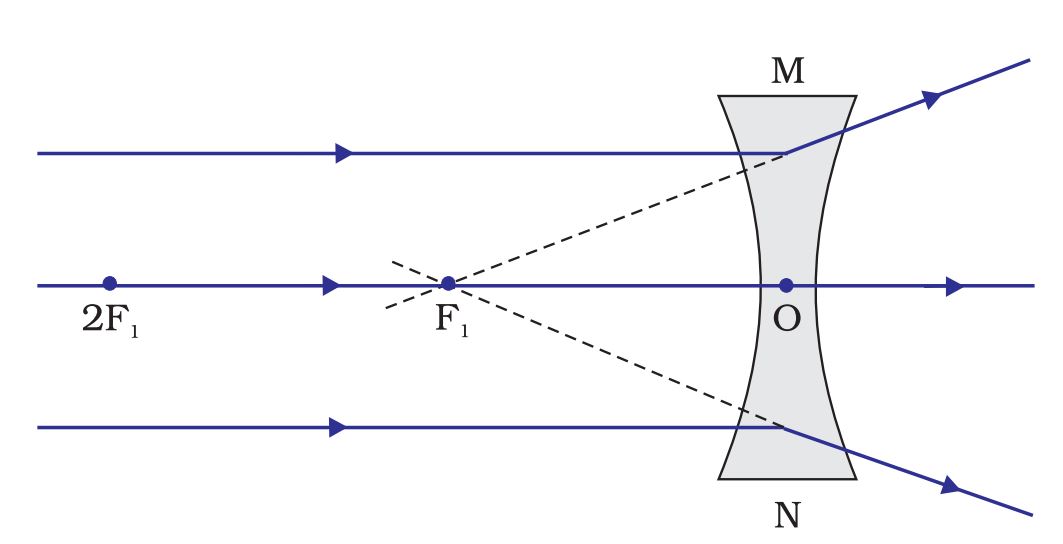
When an object is placed at infinity in front of a concave lens, the image is formed at ____________. The image is _______, _______, and ____________.
जब किसी वस्तु को अवतल लेंस के सामने अनंत पर रखा जाता है, तो प्रतिबिंब ____________ पर बनता है। बनने वाला प्रतिबिंब _______, _______, तथा ____________ होता है।
a
At the principal focus (F) on the same side, virtual, erect, highly diminished
मुख्य फोकस (F) पर उसी तरफ, आभासी, सीधा, अत्यधिक लघु
b
At 2F, real, inverted, same size
2F पर, वास्तविक, उल्टा, समान आकार
c
At infinity, real, inverted, magnified
अनंत पर, वास्तविक, उल्टा, आवर्धित
d
At optical centre, virtual, erect, magnified
प्रकाशिक केंद्र पर, आभासी, सीधा, आवर्धित
Ans english:-
When an object is placed at infinity in front of a concave lens, the rays diverge after refraction and appear to come from the principal focus on the same side of the lens. The image is virtual, erect, and highly diminished.
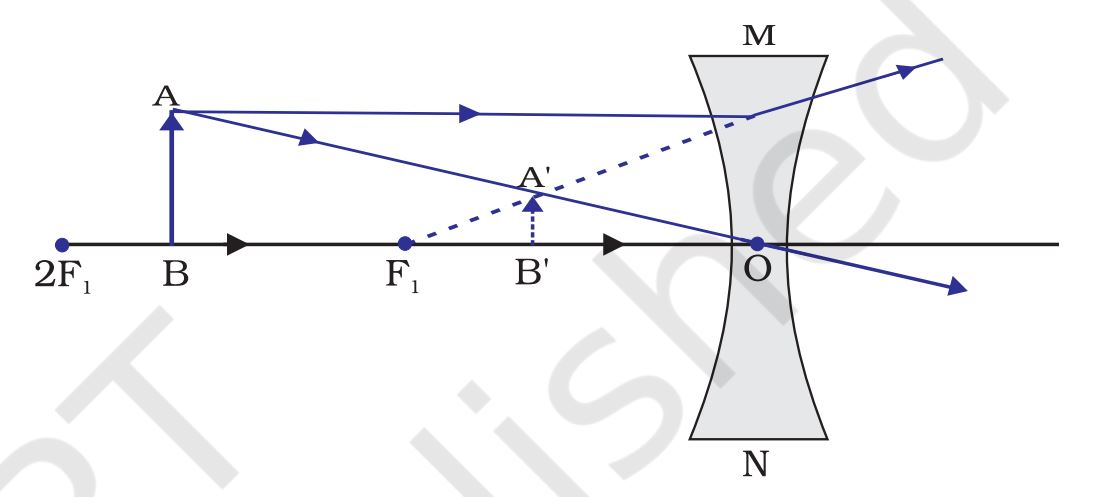
Nature, Position and Relative Size of Image Formed by a Concave Lens
Sl No
Position of the object
Position of the image
Relative size of the image
Nature of the image
1
At infinity
At focus F1
Highly diminished, point-sized
Virtual and erect
2
Between infinity and optical centre O of the lens
Between focus F1 and optical centre O
Diminished
Virtual and erect
Ans hindi:-
जब किसी वस्तु को अनंत पर अवतल लेंस के सामने रखा जाता है, तो किरणें अपवर्तन के बाद अपसारित हो जाती हैं और ऐसा प्रतीत होता है कि वे लेंस के उसी तरफ मुख्य फोकस से आ रही हैं। यह प्रतिबिंब आभासी, सीधा तथा अत्यधिक लघु होता है।
अवतल लेंस द्वारा प्रतिबिंब का बनना, उसकी स्थिति तथा आपेक्षिक आकार
Sl No
वस्तु की स्थिति
प्रतिबिंब की स्थिति
प्रतिबिंब का आपेक्षिक आकार
प्रतिबिंब की प्रकृति
1
अनंत पर
फोकस F1 पर
अत्यधिक छोटा, बिंदु के आकार का
आभासी तथा सीधा
2
अनंत तथा लेंस के प्रकाशिक केंद्र O के बीच
फोकस F1 तथा प्रकाशिक केंद्र O के बीच
छोटा
आभासी तथा सीधा
Tap an option to reveal the answer
82
Question 82
When an object is placed anywhere between infinity and the optical centre of a concave lens, the image is formed between ____________ and ____________. The image is _______, _______, and ____________.
जब किसी वस्तु को अवतल लेंस के सामने अनंत और प्रकाशिक केंद्र के बीच कहीं भी रखा जाता है, तो प्रतिबिंब ____________ और ____________ के बीच बनता है। बनने वाला प्रतिबिंब _______, _______, तथा ____________ होता है।
a
F and optical centre, virtual, erect, diminished
मुख्य फोकस और प्रकाशिक केंद्र के बीच, आभासी, सीधा, लघु
b
At 2F, real, inverted, same size
2F पर, वास्तविक, उल्टा, समान आकार
c
Beyond 2F, real, inverted, magnified
2F से परे, वास्तविक, उल्टा, आवर्धित
d
At infinity, virtual, inverted, magnified
अनंत पर, आभासी, उल्टा, आवर्धित
Ans english:-
When an object is placed anywhere between infinity and the optical centre of a concave lens, the image is always formed between the principal focus (F) and the optical centre on the same side of the lens. The image is virtual, erect, and diminished.
Ans hindi:-
जब किसी वस्तु को अनंत और प्रकाशिक केंद्र के बीच कहीं भी रखा जाता है, तो प्रतिबिंब हमेशा मुख्य फोकस (F) और प्रकाशिक केंद्र के बीच बनता है। यह प्रतिबिंब आभासी, सीधा तथा लघु होता है।
Tap an option to reveal the answer
83
Question 83
A ______________ lens will always give a virtual, erect and diminished image, irrespective of the position of the object.
______________ लेंस वस्तु की स्थिति चाहे कहीं भी हो, हमेशा आभासी, सीधा और छोटा प्रतिबिंब बनाता है।
a
Convex
उत्तल
b
Concave
अवतल
c
Plano-convex
समतल-उत्तल
d
Bifocal
द्विफोकसी
Ans english:-
A concave lens always forms a virtual, erect, and diminished image regardless of the object's position because it diverges the incoming light rays.
Ans hindi:-
अवतल लेंस हमेशा आभासी, सीधा और छोटा प्रतिबिंब बनाता है, चाहे वस्तु किसी भी स्थिति में हो, क्योंकि यह आने वाली प्रकाश किरणों को अपसारित करता है।
Tap an option to reveal the answer
84
Question 84
What is the Lens Formula?
लेंस सूत्र क्या है?
a
b
c
d
Ans english:-
The lens formula is , where is the focal length of the lens, is the image distance, and is the object distance.
Ans hindi:-
लेंस सूत्र है, जहाँ लेंस की फोकस दूरी, प्रतिबिंब दूरी तथा वस्तु दूरी को दर्शाता है।
Tap an option to reveal the answer
85
Question 85
Magnification is defined as the ratio of the ____________ of the __________ and the ____________ of the __________.
आवर्धन को __________ की __________ और __________ की __________ के अनुपात के रूप में परिभाषित किया जाता है।
a
height, image, height, object
प्रतिबिंब, ऊँचाई, वस्तु, ऊँचाई
b
length, object, width, image
वस्तु, लंबाई, प्रतिबिंब, चौड़ाई
c
distance, image, distance, object
प्रतिबिंब, दूरी, वस्तु, दूरी
d
height, object, height, image
वस्तु, ऊँचाई, प्रतिबिंब, ऊँचाई
Ans english:-
Magnification is defined as the ratio of the height of the image to the height of the object. Mathematically, .
Ans hindi:-
आवर्धन को प्रतिबिंब की ऊँचाई और वस्तु की ऊँचाई के अनुपात के रूप में परिभाषित किया जाता है। गणितीय रूप से, ।
Tap an option to reveal the answer
86
Question 86
Magnification is also defined as the ratio of the ____________ of the __________ and the ____________ of the __________.
आवर्धन को __________ की __________ और __________ की __________ के अनुपात के रूप में भी परिभाषित किया जाता है।
a
distance, image, distance, object
प्रतिबिंब, दूरी, वस्तु, दूरी
b
height, image, height, object
प्रतिबिंब, ऊँचाई, वस्तु, दूरी
c
length, object, length, image
वस्तु, दूरी, प्रतिबिंब, ऊँचाई
d
time, image, time, object
वस्तु, दूरी, प्रतिबिंब, दूरी
Ans english:-
Magnification can also be defined as the ratio of the distance of image to the distance of object. Mathematically, , where is image distance and is object distance.
Ans hindi:-
आवर्धन को प्रतिबिंब की दूरी और वस्तु की दूरी के अनुपात के रूप में भी परिभाषित किया जाता है। गणितीय रूप से, , जहाँ प्रतिबिंब दूरी तथा वस्तु दूरी है।
Tap an option to reveal the answer
87
Question 87
The power of a lens is defined as the reciprocal of its ___________. It is represented by the letter P.
लेंस की शक्ति को उसके ___________ के व्युत्क्रम के रूप में परिभाषित किया जाता है। इसे P अक्षर द्वारा दर्शाया जाता है।
a
focal length
फोकस दूरी
b
object distance
वस्तु दूरी
c
image distance
प्रतिबिंब दूरी
d
radius of curvature
वक्रता त्रिज्या
Ans english:-
The power of a lens is defined as the reciprocal of its focal length. Mathematically, , where is power and is focal length.
Ans hindi:-
लेंस की शक्ति को उसके फोकस दूरी के व्युत्क्रम के रूप में परिभाषित किया जाता है। गणितीय रूप से, , जहाँ शक्ति तथा फोकस दूरी है।
Tap an option to reveal the answer
88
Question 88
The SI unit of power of a lens is ‘_____________’.
लेंस की शक्ति की SI इकाई ‘_____________’ होती है।
a
dioptre
डायोप्टर
b
meter
मीटर
c
watt
वाट
d
joule
जूल
Ans english:-
The SI unit of power of a lens is dioptre, represented as D. It is defined as the reciprocal of focal length measured in meters.
Ans hindi:-
लेंस की शक्ति की SI इकाई डायोप्टर होती है, जिसे D से दर्शाया जाता है। यह मीटर में मापी गई फोकस दूरी के व्युत्क्रम के बराबर होती है।
Tap an option to reveal the answer
89
Question 89
The power of a convex lens is _________________ and that of a concave lens is ________________.
उत्तल लेंस की शक्ति _________________ होती है तथा अवतल लेंस की शक्ति ________________ होती है।
a
positive, negative
धनात्मक, ऋणात्मक
b
negative, positive
ऋणात्मक, धनात्मक
c
positive, positive
धनात्मक, धनात्मक
d
negative, negative
ऋणात्मक, ऋणात्मक
Ans english:-
The power of a convex lens is positive because it converges light rays, while the power of a concave lens is negative because it diverges light rays.
Ans hindi:-
उत्तल लेंस की शक्ति धनात्मक होती है क्योंकि यह प्रकाश किरणों को अभिसरित करता है, जबकि अवतल लेंस की शक्ति ऋणात्मक होती है क्योंकि यह प्रकाश किरणों को अपसारित करता है।
Tap an option to reveal the answer
90
Question 90
Which one of the following materials cannot be used to make a lens?
निम्नलिखित में से किस पदार्थ का उपयोग लेंस बनाने के लिए नहीं किया जा सकता?
a
Water
जल
b
Glass
काँच
c
Plastic
प्लास्टिक
d
Clay
मिट्टी
Ans english:-
A lens must be made of a transparent material that allows light to pass through. Clay is opaque, so it cannot transmit light and therefore cannot be used to make a lens.
Ans hindi:-
लेंस ऐसे पारदर्शी पदार्थ से बनाया जाता है जिससे प्रकाश गुजर सके। मिट्टी अपारदर्शी होती है, इसलिए यह प्रकाश को पारित नहीं होने देती और लेंस बनाने के लिए उपयुक्त नहीं है।