Light – Reflection and Refraction Class 10 Physics Questions & Answers
प्रकाश – परावर्तन तथा अपवर्तन
Bihar Board/NCERT Class 10 Physics, Chapter 10: objective (MCQ) and subjective (short and long answer) questions with answers.
21
Question 21
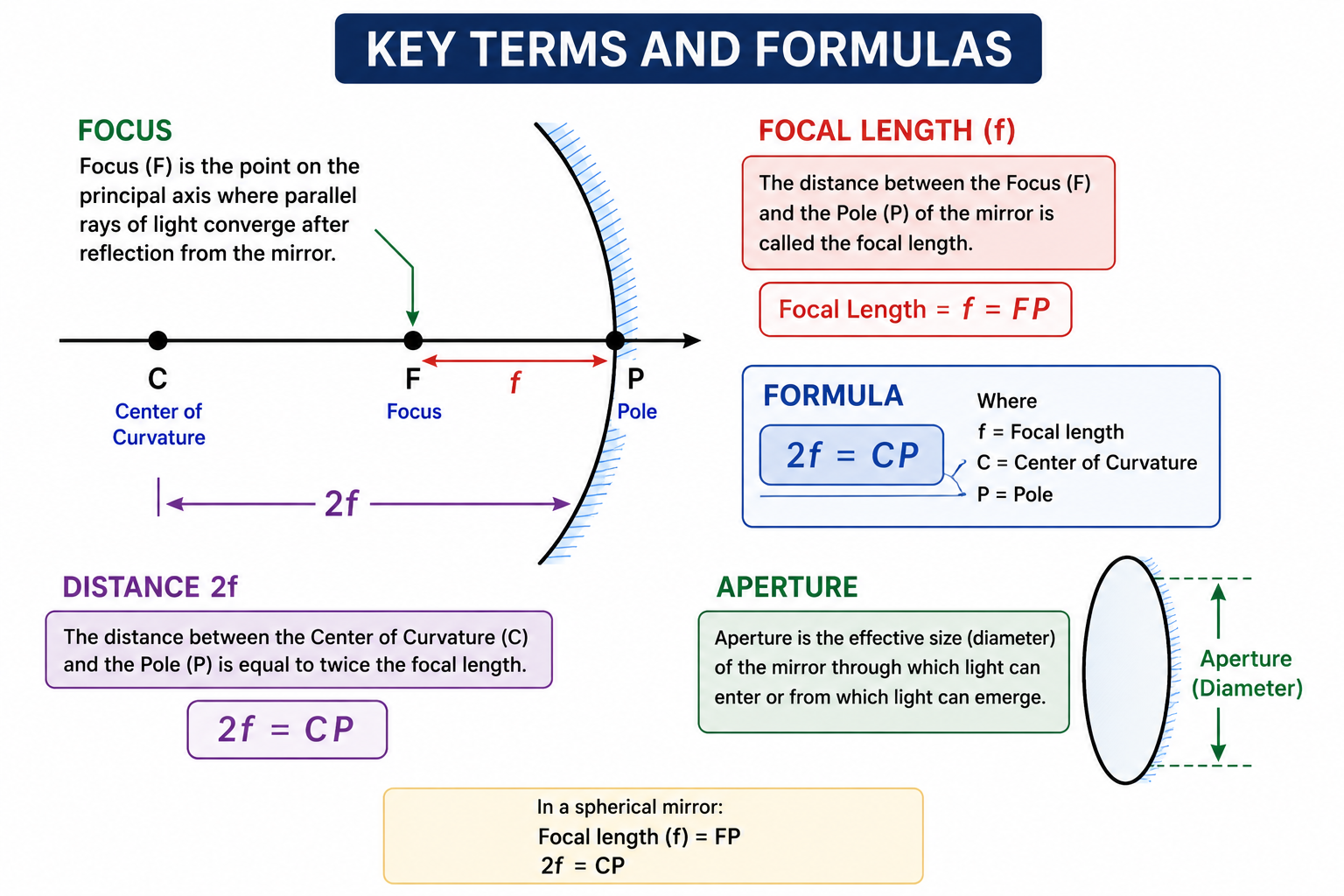
The distance between the pole and the principal focus of a spherical mirror is called the _________, represented by letter _________.
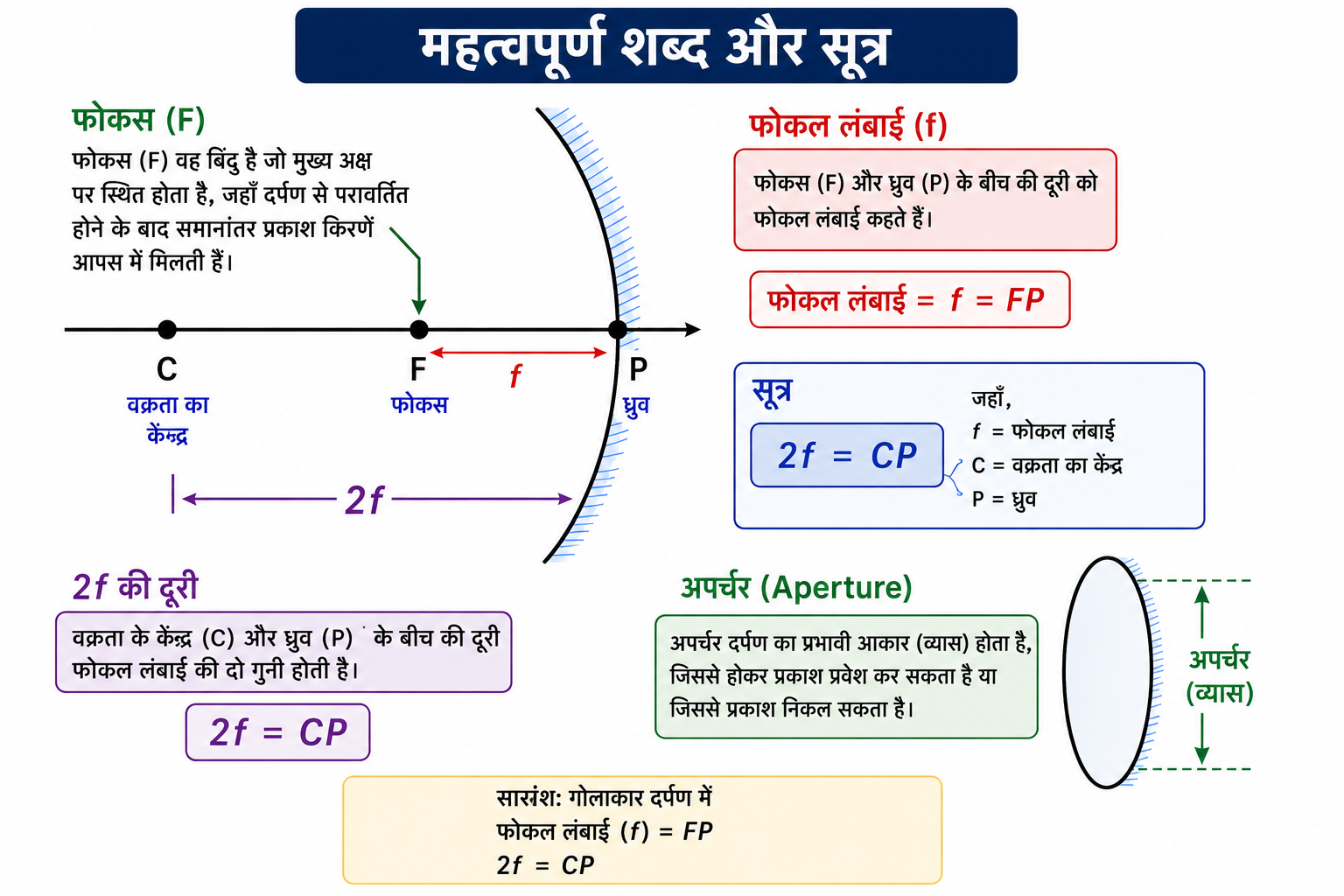
गोलीय दर्पण के ध्रुव और मुख्य फोकस के बीच की दूरी _________ कहलाती है और इसे _________ अक्षर से दर्शाया जाता है।
a
Radius of curvature, R
वक्रता त्रिज्या, R
b
Aperture, A
द्वारक, A
c
Focal length, f
फोकस दूरी, f
d
Object distance, u
वस्तु दूरी, u
Ans english:-
The distance between the pole (P) and the principal focus (F) of a spherical mirror is called the focal length, represented by the letter f. The relationship between focal length and radius of curvature is:
Ans hindi:-
गोलीय दर्पण के ध्रुव (P) और मुख्य फोकस (F) के बीच की दूरी फोकस दूरी (focal length) कहलाती है और इसे f अक्षर से दर्शाया जाता है। फोकस दूरी और वक्रता त्रिज्या में संबंध:
Tap an option to reveal the answer
22
Question 22
The diameter of the reflecting surface of a spherical mirror is called its _________.
गोलीय दर्पण की परावर्तक सतह के व्यास को _________ कहते हैं।
a
Focal length
फोकस दूरी
b
Radius of curvature
वक्रता त्रिज्या
c
Aperture
द्वारक
d
Principal axis
मुख्य अक्ष
Ans english:-
The diameter of the reflecting surface of a spherical mirror is called its aperture. For mirrors with a small aperture, the radius of curvature is approximately equal to twice the focal length: . A larger aperture means a wider mirror surface.
Ans hindi:-
गोलीय दर्पण की परावर्तक सतह के व्यास को उसका द्वारक (aperture) कहते हैं। छोटे द्वारक वाले दर्पणों के लिए वक्रता त्रिज्या लगभग फोकस दूरी की दोगुनी होती है: । बड़ा द्वारक अर्थात् चौड़ी दर्पण सतह।
Tap an option to reveal the answer
23
Question 23
The point on the principal axis where reflected rays actually meet in a concave mirror or appear to come from in a convex mirror is called the _________.
मुख्य अक्ष पर स्थित वह बिंदु जहाँ अवतल दर्पण में परावर्तित किरणें वास्तव में मिलती हैं या उत्तल दर्पण में जिससे वे आती हुई प्रतीत होती हैं, उसे _________ कहते हैं।
a
Pole
ध्रुव
b
Centre of curvature
वक्रता केंद्र
c
Principal focus
मुख्य फोकस
d
Principal axis
मुख्य अक्ष
Ans english:-
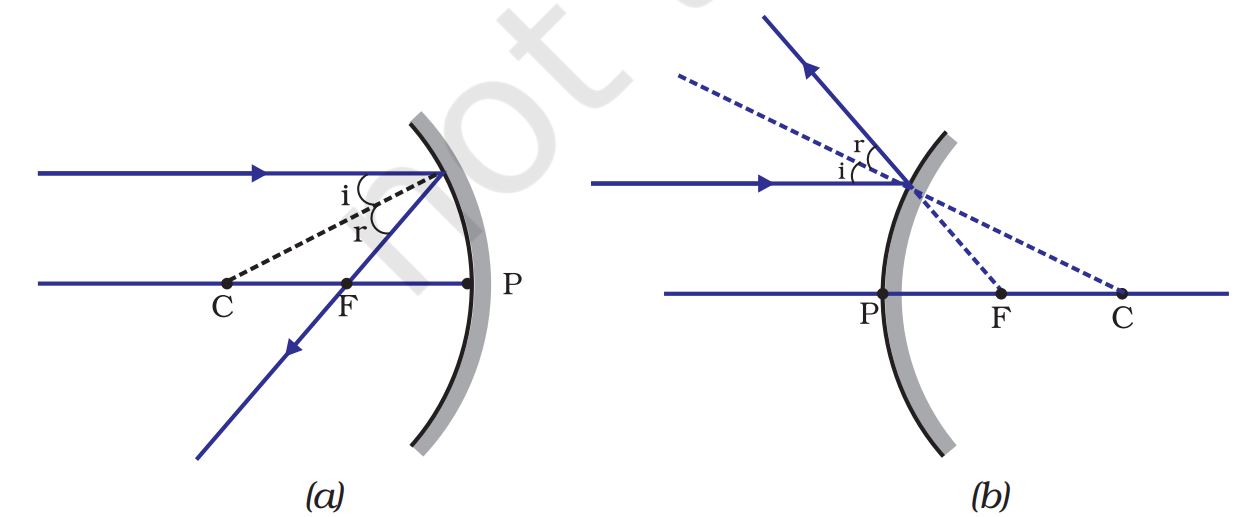
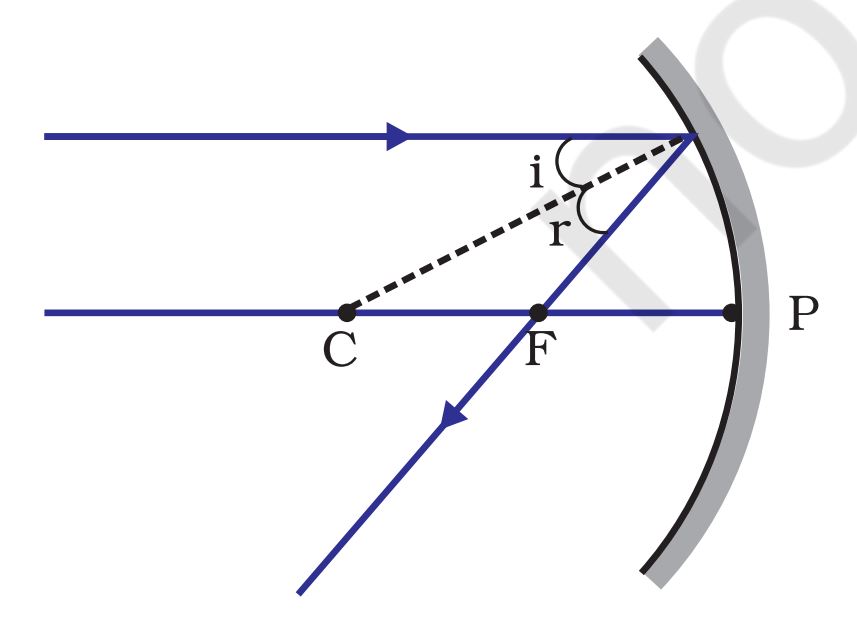
The principal focus is the point on the principal axis where rays parallel to the principal axis either actually converge after reflection from a concave mirror or appear to diverge from after reflection from a convex mirror.
Ans hindi:-
मुख्य फोकस (Principal Focus) मुख्य अक्ष पर स्थित वह बिंदु है जहाँ मुख्य अक्ष के समानांतर आने वाली किरणें अवतल दर्पण में परावर्तन के बाद वास्तव में मिलती हैं, जबकि उत्तल दर्पण में वे इसी बिंदु से आती हुई प्रतीत होती हैं।
Tap an option to reveal the answer
24
Question 24
What is the relationship between the radius of curvature R and focal length f of a spherical mirror?
गोलीय दर्पण की वक्रता त्रिज्या R और फोकस दूरी f के बीच क्या संबंध है?
a
R = f
b
R = 3f
c
R = 2f
d
f = 2R
Ans english:-
The radius of curvature of a spherical mirror is twice its focal length:
This is because the principal focus lies midway between the pole (P) and the centre of curvature (C) for mirrors with small apertures.
Ans hindi:-
गोलीय दर्पण की वक्रता त्रिज्या उसकी फोकस दूरी की दोगुनी होती है:
ऐसा इसलिए है क्योंकि मुख्य फोकस, ध्रुव (P) और वक्रता केंद्र (C) के ठीक बीच में स्थित होता है (छोटे द्वारक वाले दर्पणों के लिए)।
Tap an option to reveal the answer
25
Question 25
The principal focus of a spherical mirror lies _________.
गोलीय दर्पण का मुख्य फोकस _________ स्थित होता है।
a
At the pole of the mirror
दर्पण के ध्रुव पर
b
At the centre of curvature
वक्रता केंद्र पर
c
Midway between the pole and centre of curvature
ध्रुव और वक्रता केंद्र के बीच में
d
At infinity
अनंत पर
Ans english:-
The principal focus of a spherical mirror lies midway between the pole and the centre of curvature. This is why the focal length , where R is the radius of curvature.
Ans hindi:-
गोलीय दर्पण का मुख्य फोकस, ध्रुव और वक्रता केंद्र के ठीक बीच में स्थित होता है। इसीलिए फोकस दूरी होती है, जहाँ R वक्रता त्रिज्या है।
Tap an option to reveal the answer
26
Question 26
A ray of light parallel to the principal axis, after reflection from a concave mirror, will _________.
मुख्य अक्ष के समानांतर प्रकाश की एक किरण, अवतल दर्पण से परावर्तन के बाद, _________ होगी।
a
Emerge parallel to the principal axis
मुख्य अक्ष के समानांतर निकलेगी
b
Pass through the centre of curvature
वक्रता केंद्र से होकर गुज़रेगी
c
Pass through the principal focus
मुख्य फोकस से होकर गुज़रेगी
d
Appear to diverge from the pole
ध्रुव से अपसारित होती प्रतीत होगी
Ans english:-
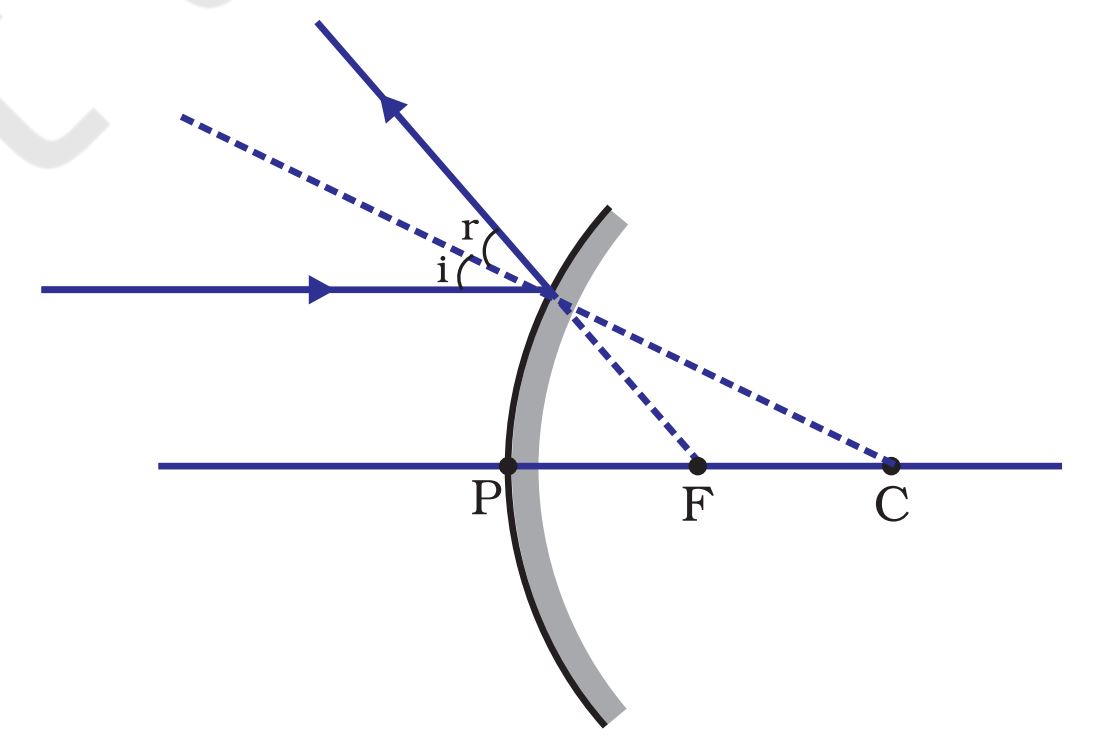
A ray of light parallel to the principal axis, after reflection from a concave mirror, will pass through the principal focus (F). In the case of a convex mirror, such a ray after reflection will appear to diverge from the principal focus (which lies behind the mirror). This is one of the key rules used to construct ray diagrams for spherical mirrors.
Ans hindi:-
मुख्य अक्ष के समानांतर प्रकाश की एक किरण, अवतल दर्पण से परावर्तन के बाद मुख्य फोकस (F) से होकर गुज़रेगी। उत्तल दर्पण के मामले में, ऐसी किरण परावर्तन के बाद मुख्य फोकस से अपसारित होती प्रतीत होगी (जो दर्पण के पीछे होता है)। यह गोलीय दर्पणों के लिए किरण आरेख बनाने का एक प्रमुख नियम है।
Tap an option to reveal the answer
27
Question 27
A ray of light parallel to the principal axis, after reflection from a convex mirror, will _________.
मुख्य अक्ष के समानांतर प्रकाश की एक किरण, उत्तल दर्पण से परावर्तन के बाद, _________ होगी।
a
Pass through the principal focus
मुख्य फोकस से होकर गुज़रेगी
b
Appear to diverge from the principal focus
मुख्य फोकस से अपसारित होती प्रतीत होगी
c
Pass through the centre of curvature
वक्रता केंद्र से होकर गुज़रेगी
d
Emerge parallel to the principal axis
मुख्य अक्ष के समानांतर निकलेगी
Ans english:-
A ray of light parallel to the principal axis, after reflection from a convex mirror, will appear to diverge from the principal focus (F), which lies behind the mirror. The reflected ray does not actually pass through the focus but appears to originate from it.
Ans hindi:-
मुख्य अक्ष के समानांतर प्रकाश की एक किरण, उत्तल दर्पण से परावर्तन के बाद मुख्य फोकस (F) से अपसारित होती प्रतीत होगी, जो दर्पण के पीछे स्थित होता है। परावर्तित किरण वास्तव में फोकस से नहीं गुजरती, बल्कि ऐसा प्रतीत होता है कि वह वहीं से निकल रही है।
Tap an option to reveal the answer
28
Question 28
A ray passing through the principal focus of a concave mirror, after reflection, will _________.
अवतल दर्पण के मुख्य फोकस से होकर गुज़रने वाली किरण, परावर्तन के बाद, _________ होगी।
a
Pass through the centre of curvature
वक्रता केंद्र से होकर गुज़रेगी
b
Emerge parallel to the principal axis
मुख्य अक्ष के समानांतर निकलेगी
c
Be reflected back along the same path
उसी पथ पर वापस परावर्तित होगी
d
Diverge away from the principal axis
मुख्य अक्ष से दूर अपसारित होगी
Ans english:-
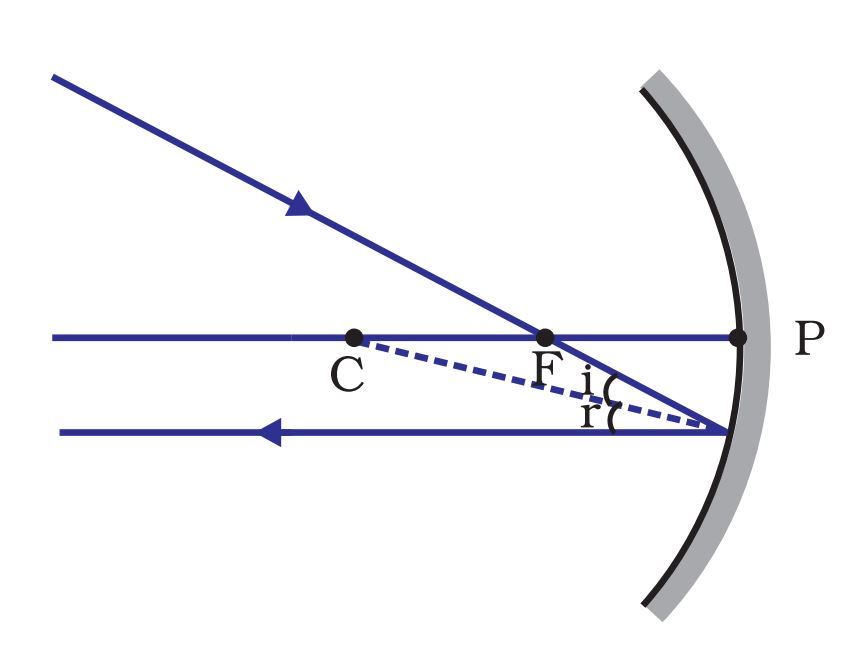
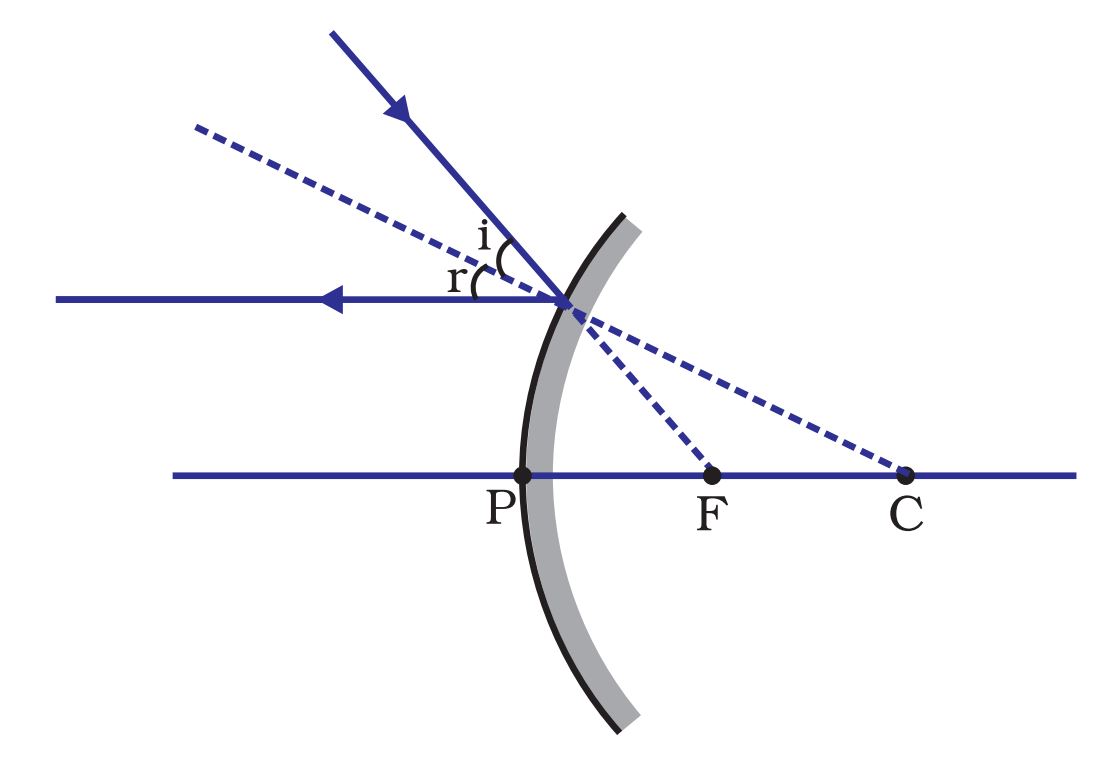
A ray passing through the principal focus of a concave mirror, after reflection, will emerge parallel to the principal axis. Similarly, a ray directed towards the principal focus of a convex mirror, after reflection, will also emerge parallel to the principal axis. This is the reverse of the first rule of reflection.
Ans hindi:-
अवतल दर्पण के मुख्य फोकस से होकर गुज़रने वाली किरण, परावर्तन के बाद मुख्य अक्ष के समानांतर निकलेगी। इसी प्रकार, उत्तल दर्पण के मुख्य फोकस की ओर निर्देशित किरण भी परावर्तन के बाद मुख्य अक्ष के समानांतर निकलेगी। यह परावर्तन के पहले नियम का विपरीत है।
Tap an option to reveal the answer
29
Question 29
A ray directed towards the principal focus of a convex mirror, after reflection, will _________.
उत्तल दर्पण के मुख्य फोकस की ओर निर्देशित किरण, परावर्तन के बाद, _________ होगी।
a
Pass through the centre of curvature
वक्रता केंद्र से होकर गुज़रेगी
b
Emerge parallel to the principal axis
मुख्य अक्ष के समानांतर निकलेगी
c
Be reflected back along the same path
उसी पथ पर वापस परावर्तित होगी
d
Diverge away from the principal axis
मुख्य अक्ष से दूर अपसारित होगी
Ans english:-
A ray directed towards the principal focus of a convex mirror, after reflection, emerges parallel to the principal axis. This is one of the important ray rules used in drawing ray diagrams for convex mirrors.
Ans hindi:-
उत्तल दर्पण के मुख्य फोकस की ओर निर्देशित किरण, परावर्तन के बाद मुख्य अक्ष के समानांतर निकलती है। यह उत्तल दर्पण के लिए किरण आरेख बनाने में प्रयुक्त महत्वपूर्ण किरण नियमों में से एक है।
Tap an option to reveal the answer
30
Question 30
A ray passing through the centre of curvature of a concave mirror, after reflection, _________.
अवतल दर्पण के वक्रता केंद्र से होकर गुज़रने वाली किरण, परावर्तन के बाद, _________ होगी।
a
Passes through the principal focus
मुख्य फोकस से होकर गुज़रेगी
b
Emerges parallel to the principal axis
मुख्य अक्ष के समानांतर निकलेगी
c
Is reflected back along the same path
उसी पथ पर वापस परावर्तित होगी
d
Diverges after reflection
परावर्तन के बाद अपसारित होगी
Ans english:-
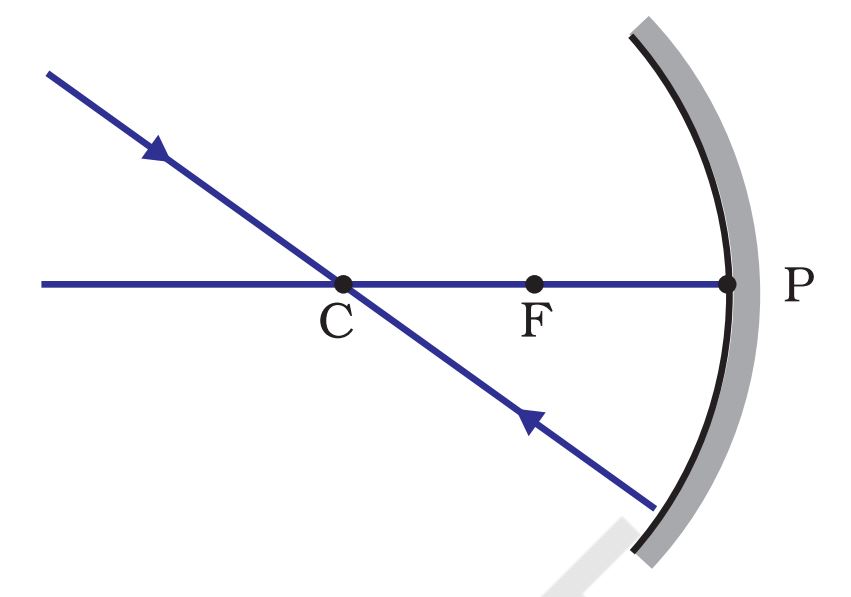
A ray passing through the centre of curvature (C) of a concave mirror, after reflection, is reflected back along the same path. This is because a ray through C strikes the mirror normally (perpendicularly), so the angle of incidence is 0°, and it reflects back along the same path. Similarly, a ray directed towards the centre of curvature of a convex mirror is also reflected back along the same path.
Ans hindi:-
अवतल दर्पण के वक्रता केंद्र (C) से होकर गुज़रने वाली किरण, परावर्तन के बाद उसी पथ पर वापस परावर्तित होती है। ऐसा इसलिए होता है क्योंकि C से गुज़रने वाली किरण दर्पण पर अभिलम्बवत (लंबवत) आपतित होती है, इसलिए आपतन कोण 0° होता है और किरण उसी पथ पर वापस परावर्तित होती है। इसी प्रकार, उत्तल दर्पण के वक्रता केंद्र की ओर निर्देशित किरण भी उसी पथ पर वापस परावर्तित होती है।