Light – Reflection and Refraction Class 10 Physics Questions & Answers
प्रकाश – परावर्तन तथा अपवर्तन
Bihar Board/NCERT Class 10 Physics, Chapter 10: objective (MCQ) and subjective (short and long answer) questions with answers.
61
Question 61
A ray of light travelling from a denser medium to a rarer medium _________.
सघन माध्यम से विरल माध्यम में जाने वाली प्रकाश की किरण _________ है।
a
Slows down and bends towards the normal
धीमी होती है और अभिलम्ब की ओर झुकती है
b
Slows down and bends away from the normal
धीमी होती है और अभिलम्ब से दूर झुकती है
c
Speeds up and bends away from the normal
तेज़ होती है और अभिलम्ब से दूर झुकती है
d
Travels without any change in direction
बिना किसी दिशा परिवर्तन के चलती है
Ans english:-
A ray of light travelling from a denser medium to a rarer medium (e.g., glass to air) speeds up and bends away from the normal. This means the angle of refraction is greater than the angle of incidence: .
Ans hindi:-
सघन माध्यम से विरल माध्यम (जैसे काँच से वायु) में जाने वाली प्रकाश की किरण तेज़ हो जाती है और अभिलम्ब से दूर झुक जाती है। इसका अर्थ है कि अपवर्तन कोण, आपतन कोण से अधिक होता है: ।
Tap an option to reveal the answer
62
Question 62
Light enters from air to glass having refractive index 1.50. What is the speed of light in the glass? (Speed of light in vacuum = 3 × 10⁸ m s⁻¹)
प्रकाश वायु से काँच में प्रवेश करता है जिसका अपवर्तनांक 1.50 है। काँच में प्रकाश की गति क्या है? (निर्वात में प्रकाश की गति = 3 × 10⁸ m s⁻¹)
a
1.5 × 10⁸ m/s
b
4.5 × 10⁸ m/s
c
2 × 10⁸ m/s
d
3 × 10⁸ m/s
Ans english:-
Using the formula for refractive index:
The speed of light in glass is . Since glass is a denser medium than air, light travels slower in glass than in vacuum.
Ans hindi:-
अपवर्तनांक के सूत्र का उपयोग करते हुए:
काँच में प्रकाश की गति है। चूँकि काँच, वायु की तुलना में सघन माध्यम है, इसलिए काँच में प्रकाश धीमी गति से चलता है।
Tap an option to reveal the answer
63
Question 63
Which lens is used by watchmakers?
घड़ीसाज़ किस लेंस का उपयोग करते हैं?
a
Concave lens
अवतल लेंस
b
Convex lens
उत्तल लेंस
c
Cylindrical lens
बेलनाकार लेंस
d
Bifocal lens
द्विफोकसी लेंस
Ans english:-
Watchmakers use a convex lens because it acts as a magnifying glass. It produces a magnified image of small parts of a watch, making them easier to see and repair.
Ans hindi:-
घड़ीसाज़ उत्तल लेंस का उपयोग करते हैं क्योंकि यह आवर्धक काँच की तरह कार्य करता है। यह घड़ी के छोटे-छोटे भागों का बड़ा प्रतिबिंब बनाता है, जिससे उन्हें देखना और मरम्मत करना आसान हो जाता है।
Tap an option to reveal the answer
64
Question 64
A lens is bound by at least ____________ spherical surface.
एक लेंस कम से कम ____________ गोलाकार सतह से घिरा होता है।
a
one
एक
b
two
दो
c
three
तीन
d
four
चार
Ans english:-
A lens is a transparent optical medium bounded by at least one spherical surface. This structure enables the lens to refract light and form images.
Ans hindi:-
लेंस एक पारदर्शी प्रकाशीय माध्यम होता है जो कम से कम एक गोलाकार सतह से घिरा होता है। यह संरचना लेंस को प्रकाश का अपवर्तन करने और प्रतिबिंब बनाने में सक्षम बनाती है।
Tap an option to reveal the answer
65
Question 65
Convex lenses are also called ____________ lenses.
उत्तल लेंसों को ____________ लेंस भी कहा जाता है।
a
Diverging
अपसारी
b
Converging
अभिसारी
c
Plane
समतल
d
Cylindrical
बेलनाकार
Ans english:-
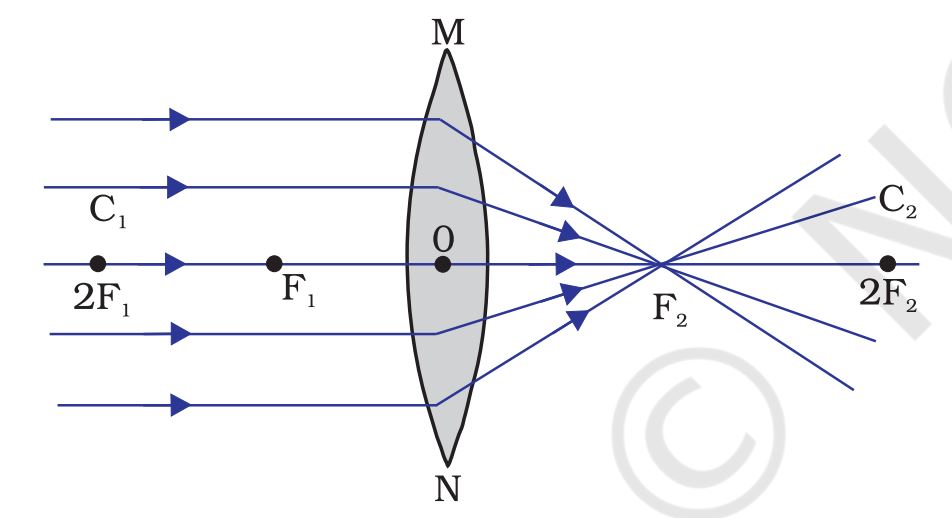
Convex lenses are called converging lenses because they bring parallel rays of light together at a point called the focus.
Ans hindi:-
उत्तल लेंसों को अभिसारी लेंस कहा जाता है क्योंकि वे प्रकाश की समानांतर किरणों को एक बिंदु पर एकत्रित कर देते हैं, जिसे फोकस कहते हैं।
Tap an option to reveal the answer
66
Question 66
Concave lenses are also called ____________ lenses.
अवतल लेंसों को ____________ लेंस भी कहा जाता है।
a
Converging
अभिसारी
b
Plane
समतल
c
Diverging
अपसारी
d
Cylindrical
बेलनाकार
Ans english:-
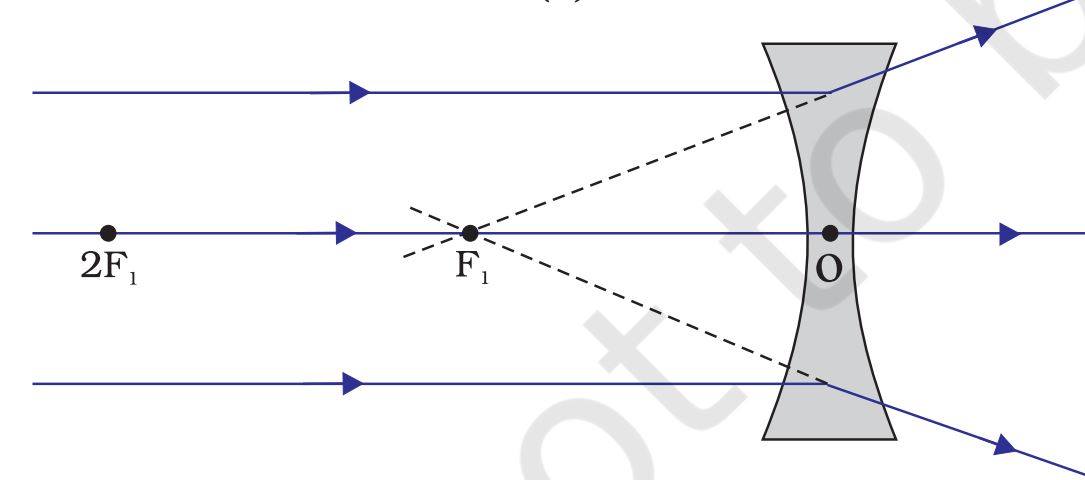
Concave lenses are called diverging lenses because they spread out parallel rays of light after refraction.
Ans hindi:-
अवतल लेंसों को अपसारी लेंस कहा जाता है क्योंकि वे अपवर्तन के बाद प्रकाश की समानांतर किरणों को फैला देते हैं।
Tap an option to reveal the answer
67
Question 67
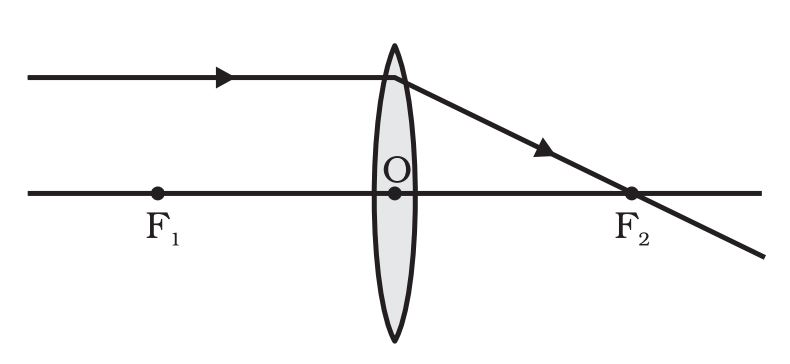
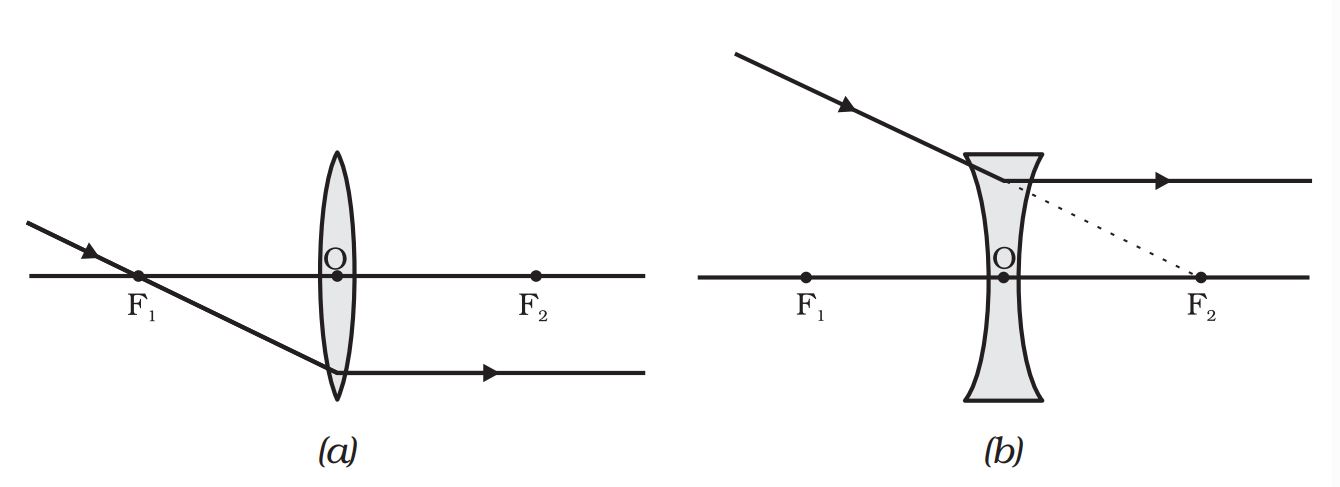
Several rays of light parallel to the principal axis are falling on a convex lens. These rays, after refraction from the lens, are converging to a point on the principal axis. This point on the principal axis is called the ___________ of the lens.
मुख्य अक्ष के समानांतर आने वाली प्रकाश की कई किरणें एक उत्तल लेंस पर गिरती हैं। लेंस से अपवर्तन के बाद ये किरणें मुख्य अक्ष पर एक बिंदु पर मिलती हैं। इस बिंदु को लेंस का ___________ कहते हैं।
a
Principal focus
मुख्य फोकस
b
Optical centre
प्रकाशिक केंद्र
c
Centre of curvature
वक्रता केंद्र
d
Principal axis
मुख्य अक्ष
Ans english:-
When rays of light parallel to the principal axis pass through a convex lens, they converge at a point on the principal axis after refraction. This point is called the principal focus of the lens.
Ans hindi:-
जब मुख्य अक्ष के समानांतर प्रकाश किरणें उत्तल लेंस से गुजरती हैं, तो अपवर्तन के बाद वे मुख्य अक्ष के एक बिंदु पर मिलती हैं। इस बिंदु को मुख्य फोकस कहते हैं।
Tap an option to reveal the answer
68
Question 68
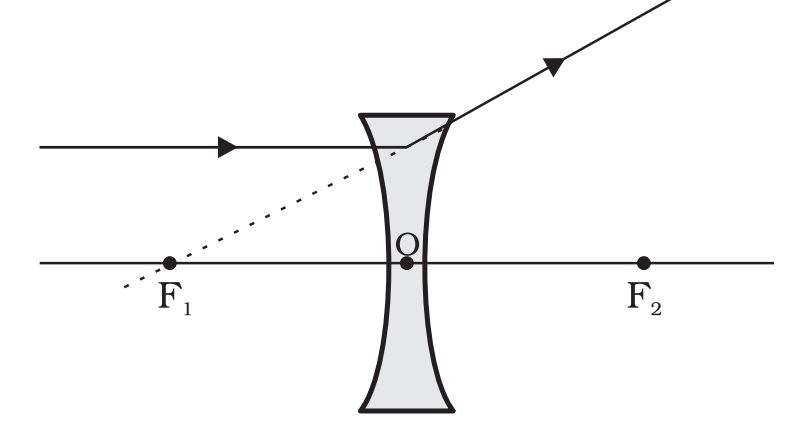
Several rays of light parallel to the principal axis are falling on a concave lens. These rays, after refraction from the lens, are appearing to diverge from a point on the principal axis. This point on the principal axis is called the ____________ of the concave lens.
मुख्य अक्ष के समानांतर आने वाली प्रकाश की कई किरणें एक अवतल लेंस पर गिरती हैं। लेंस से अपवर्तन के बाद ये किरणें मुख्य अक्ष के एक बिंदु से अपसारित होती हुई प्रतीत होती हैं। इस बिंदु को अवतल लेंस का ____________ कहते हैं।
a
Principal focus
मुख्य फोकस
b
Optical centre
प्रकाशिक केंद्र
c
Centre of curvature
वक्रता केंद्र
d
Principal axis
मुख्य अक्ष
Ans english:-
When rays of light parallel to the principal axis pass through a concave lens, they diverge after refraction and appear to come from a point on the principal axis. This point is called the principal focus of the concave lens.
Ans hindi:-
जब मुख्य अक्ष के समानांतर प्रकाश किरणें अवतल लेंस से गुजरती हैं, तो अपवर्तन के बाद वे अपसारित होती हैं और ऐसा प्रतीत होता है कि वे मुख्य अक्ष के एक बिंदु से आ रही हैं। इस बिंदु को मुख्य फोकस कहते हैं।
Tap an option to reveal the answer
69
Question 69
A lens has ___________ principal foci.
एक लेंस के ___________ मुख्य फोकस होते हैं।
a
Two
दो
b
One
एक
c
Three
तीन
d
Four
चार
Ans english:-
A lens has two principal foci, represented as F1 and F2, one on each side of the lens. This is because light can pass through the lens from either side, and each direction has its own principal focus depending on the path of light.
Ans hindi:-
एक लेंस के दो मुख्य फोकस होते हैं, जिन्हें F1 और F2 द्वारा दर्शाया जाता है। ये लेंस के दोनों ओर स्थित होते हैं क्योंकि प्रकाश लेंस से किसी भी दिशा में गुजर सकता है, और हर दिशा के लिए अलग मुख्य फोकस होता है।
Tap an option to reveal the answer
70
Question 70
The distance of the principal focus from the optical centre of a lens is called its _____________.
लेंस के प्रकाशिक केंद्र से मुख्य फोकस की दूरी को _____________ कहते हैं।
a
Focal length
फोकस दूरी
b
Power
क्षमता
c
Radius of curvature
वक्रता त्रिज्या
d
Principal axis
मुख्य अक्ष
Ans english:-
The distance between the principal focus and the optical centre of a lens is called its focal length. The letter f is used to represent the focal length.
Ans hindi:-
लेंस के मुख्य फोकस और प्रकाशिक केंद्र के बीच की दूरी को फोकस दूरी कहते हैं। फोकस दूरी को दर्शाने के लिए f अक्षर का उपयोग किया जाता है।