The Human Eye and the Colourful World Class 10 Physics Questions & Answers
मानव नेत्र तथा रंगबिरंगा संसार
Bihar Board/NCERT Class 10 Physics, Chapter 11: objective (MCQ) and subjective (short and long answer) questions with answers.
1
Question 1
Light enters the eye through a thin membrane called the _________.
प्रकाश एक पतली झिल्ली से होकर आँख में प्रवेश करता है जिसे _________ कहते हैं।
a
Retina
रेटिना या दृष्टि पटल
b
Iris
आइरिस या परितारिका
c
Cornea
कॉर्निया या स्वच्छ मंडल
d
Pupil
पुतली
Ans english:-
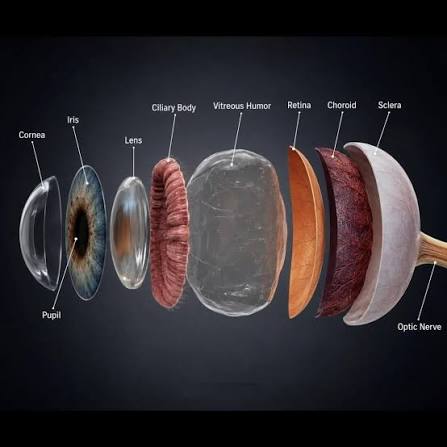
Light enters the eye through a thin membrane called the cornea. The cornea forms the transparent bulge on the front surface of the eyeball. Most of the refraction for the light rays entering the eye occurs at the outer surface of the cornea.
Ans hindi:-
प्रकाश एक पतली झिल्ली से होकर आँख में प्रवेश करता है जिसे कॉर्निया (cornea) या स्वच्छ मंडल कहते हैं। कॉर्निया/स्वच्छ मंडल नेत्रगोलक की अगली सतह पर पारदर्शी उभार बनाती है। आँख में प्रवेश करने वाली प्रकाश किरणों का अधिकांश अपवर्तन कॉर्निया/स्वच्छ मंडल की बाहरी सतह पर होता है।
Tap an option to reveal the answer
2
Question 2
The eyeball is approximately spherical in shape. What is its diameter?
नेत्रगोलक लगभग गोलाकार होता है। इसका व्यास कितना होता है?
a
About 1.3 cm
लगभग 1.3 cm
b
About 2.3 cm
लगभग 2.3 cm
c
About 3.3 cm
लगभग 3.3 cm
d
About 4.5 cm
लगभग 4.5 cm
Ans english:-
The eyeball is approximately spherical in shape with a diameter of about 2.3 cm. The front portion of the eyeball is formed by the cornea, and the interior contains a jelly-like substance. The retina, which receives the image, lines the back of the eyeball.
Ans hindi:-
नेत्रगोलक लगभग गोलाकार होता है जिसका व्यास लगभग 2.3 cm होता है। नेत्रगोलक का अगला भाग कॉर्निया/स्वच्छ मंडल से बना होता है और अंदर एक जेली जैसा पदार्थ भरा होता है। प्रतिबिम्ब प्राप्त करने वाला रेटिना/दृष्टि पटल नेत्रगोलक के पिछले भाग में होता है।
Tap an option to reveal the answer
3
Question 3
Where does most of the refraction of light rays entering the eye occur?
आँख में प्रवेश करने वाली प्रकाश किरणों का अधिकांश अपवर्तन कहाँ होता है?
a
At the eye lens
अभिनेत्र लेंस पर
b
At the retina
रेटिना/दृष्टि पटल पर
c
At the outer surface of the cornea
कॉर्निया/स्वच्छ मंडल की बाहरी सतह पर
d
At the pupil
पुतली पर
Ans english:-
Most of the refraction for the light rays entering the eye occurs at the outer surface of the cornea. The eye lens provides the remaining and finer adjustment of focal length, enabling the eye to focus on objects at varying distances. This fine adjustment is called accommodation.
Ans hindi:-
आँख में प्रवेश करने वाली प्रकाश किरणों का अधिकांश अपवर्तन कॉर्निया/स्वच्छ मंडल की बाहरी सतह पर होता है। अभिनेत्र लेंस फोकस दूरी का शेष और सूक्ष्म समायोजन प्रदान करता है, जिससे आँख विभिन्न दूरियों पर स्थित वस्तुओं पर फोकस कर पाती है। इस सूक्ष्म समायोजन को समंजन (accommodation) कहते हैं।
Tap an option to reveal the answer
4
Question 4
Which structure is found behind the cornea in the human eye?
मानव आँख में कॉर्निया/स्वच्छ मंडल के पीछे कौन सी संरचना पाई जाती है?
a
Retina
रेटिना/दृष्टि पटल
b
Optic nerve
दृक तंत्रिका
c
Iris
आइरिस/परितारिका
d
Ciliary muscles
पक्ष्माभी पेशियाँ
Ans english:-
Behind the cornea, we find a structure called the iris. The iris is a dark muscular diaphragm that controls the size of the pupil. The pupil in turn regulates the amount of light entering the eye.
Ans hindi:-
कॉर्निया/स्वच्छ मंडल के पीछे आइरिस (iris)/परितारिका नामक संरचना पाई जाती है। आइरिस/परितारिका एक गहरी पेशीय डायाफ्राम है जो पुतली(pupil) के आकार को नियंत्रित करती है। पुतली बदले में आँख में प्रवेश करने वाले प्रकाश की मात्रा को नियंत्रित करती है।
Tap an option to reveal the answer
5
Question 5
The iris is a dark muscular diaphragm that controls the size of the _________.
आइरिस/परितारिका एक गहरी पेशीय डायाफ्राम है जो _________ के आकार को नियंत्रित करती है।
a
Cornea
कॉर्निया/स्वच्छ मंडल
b
Retina
रेटिना/दृष्टि पटल
c
Pupil
पुतली
d
Eye lens
अभिनेत्र लेंस
Ans english:-
The iris is a dark muscular diaphragm that controls the size of the pupil. In bright light, the iris causes the pupil to contract (become smaller) to reduce the amount of light entering the eye. In dim light, the iris causes the pupil to dilate (become larger) to allow more light in.
Ans hindi:-
आइरिस/परितारिका एक गहरी पेशीय डायाफ्राम है जो पुतली के आकार को नियंत्रित करती है। तेज़ रोशनी में, आइरिस/परितारिकापुतली को संकुचित (छोटा) करती है ताकि आँख में प्रवेश करने वाले प्रकाश की मात्रा कम हो। मंद रोशनी में, आइरिस/परितारिका पुतली को फैला (बड़ा) देती है ताकि अधिक प्रकाश अंदर आ सके।
Tap an option to reveal the answer
6
Question 6
__________ regulates and controls the amount of light entering the eye.
_________ आँख में प्रवेश करने वाले प्रकाश की मात्रा नियंत्रित करती है|
a
Cornea
कॉर्निया/स्वच्छ मंडल
b
Pupil
पुतली
c
Retina
रेटिना/दृष्टि पटल
d
Eye Lens
अभिनेत्र लेंस
Ans english:-
The pupil regulates and controls the amount of light entering the eye. Its size is controlled by the iris. In bright light the pupil becomes small (constricts), and in dim light the pupil becomes large (dilates) to allow more light to enter.
Ans hindi:-
पुतली, आँख में प्रवेश करने वाले प्रकाश की मात्रा को नियंत्रित करती है। जबकि इसके आकार को आइरिस/परितारिका नियंत्रित करती है। तेज़ रोशनी में पुतली छोटी (संकुचित) हो जाती है, और धीमी रोशनी में पुतली बड़ी (फैली) हो जाती है ताकि अधिक प्रकाश प्रवेश कर सके।
Tap an option to reveal the answer
7
Question 7
What type of image does the eye lens form on the retina?
अभिनेत्र लेंस रेटिना/दृष्टि पटल पर किस प्रकार का प्रतिबिम्ब बनाता है?
a
Virtual and erect
आभासी और सीधा
b
Real and erect
वास्तविक और सीधा
c
Virtual and inverted
आभासी और उल्टा
d
Real and inverted
वास्तविक और उल्टा
Ans english:-
The eye lens forms an inverted real image of the object on the retina. The brain interprets this inverted image as an upright image. The retina contains light-sensitive cells that convert the image into electrical signals and send them to the brain via the optic nerve.
Ans hindi:-
अभिनेत्र लेंस, रेटिना/दृष्टि पटल पर वस्तु का उल्टा और वास्तविक प्रतिबिम्ब बनाता है। मस्तिष्क इस उल्टे प्रतिबिम्ब को सीधे प्रतिबिम्ब के रूप में व्याख्यायित करता है। रेटिना/दृष्टि पटल में प्रकाश-संवेदी कोशिकाएँ होती हैं जो इस प्रतिबिम्ब को विद्युत संकेतों में बदलती हैं और उन्हें दृक तंत्रिका (optic nerve) के माध्यम से मस्तिष्क को भेजती हैं।
Tap an option to reveal the answer
8
Question 8
Which of the following correctly describes the retina of the human eye?
निम्नलिखित में से कौन सा मानव नेत्र के रेटिना/दृष्टि पटल का सही वर्णन करता है?
a
A hard lens that focuses light; sends sound signals to the brain
एक कठोर लेंस जो प्रकाश को फोकस करता है; मस्तिष्क को ध्वनि संकेत भेजता है
b
A delicate membrane with light-sensitive cells; generates electrical signals sent to brain via optic nerves
प्रकाश-संवेदी कोशिकाओं वाली एक नाजुक झिल्ली; दृक तंत्रिकाओं के माध्यम से मस्तिष्क को विद्युत संकेत भेजती है
c
A muscular diaphragm that controls the amount of light entering the eye
एक पेशीय डायाफ्राम जो आँख में प्रवेश करने वाले प्रकाश की मात्रा को नियंत्रित करती है
d
A transparent membrane through which light enters the eye
एक पारदर्शी झिल्ली जिसके माध्यम से प्रकाश आँख में प्रवेश करता है
Ans english:-
The retina is a delicate membrane having an enormous number of light-sensitive cells. Upon illumination, these cells get activated and generate electrical signals. These signals are sent to the brain via the optic nerves, where they are interpreted as vision.
Ans hindi:-
रेटिना/दृष्टि पटल एक नाजुक झिल्ली है जिसमें बहुत अधिक संख्या में प्रकाश-संवेदी कोशिकाएँ होती हैं। प्रकाश पड़ने पर ये कोशिकाएँ सक्रिय हो जाती हैं और विद्युत संकेत उत्पन्न करती हैं। ये संकेत दृक तंत्रिकाओं (optic nerves) के माध्यम से मस्तिष्क को भेजे जाते हैं, जहाँ उन्हें दृष्टि के रूप में व्याख्यायित किया जाता है।
Tap an option to reveal the answer
9
Question 9
The eye lens is composed of _________.
अभिनेत्र लेंस _________ से बना होता है।
a
A hard, rigid crystalline material
एक कठोर, दृढ़ क्रिस्टलीय पदार्थ
b
A fibrous, jelly-like material
एक रेशेदार, जेली जैसे पदार्थ
c
A transparent liquid
एक पारदर्शी तरल
d
A thin glass-like membrane
एक पतली काँच जैसी झिल्ली
Ans english:-
The eye lens is composed of a fibrous, jelly-like material. This flexible composition allows the ciliary muscles to change its curvature, thereby adjusting its focal length. This ability to adjust focal length is called accommodation, and enables the eye to focus on both near and distant objects.
Ans hindi:-
अभिनेत्र लेंस रेशेदार, जेली जैसे पदार्थ से बना होता है। यह लचीली संरचना पक्ष्माभी पेशियों (ciliary muscles) को इसकी वक्रता बदलने की अनुमति देती है, जिससे इसकी फोकस दूरी समायोजित होती है। फोकस दूरी को समायोजित करने की इस क्षमता को समंजन (accommodation) कहते हैं, जो आँख को निकट और दूर दोनों वस्तुओं पर फोकस करने में सक्षम बनाती है।
Tap an option to reveal the answer
10
Question 10
Which part of the eye is responsible for changing the curvature of the eye lens?
आँख का कौन सा भाग अभिनेत्र लेंस की वक्रता बदलने के लिए उत्तरदायी है?
a
Iris
आइरिस/परितारिका
b
Cornea
कॉर्निया/स्वच्छ मंडल
c
Retina
रेटिना/दृष्टि पटल
d
Ciliary muscles
पक्ष्माभी पेशियाँ
Ans english:-
The curvature of the eye lens can be modified to some extent by the ciliary muscles. When the ciliary muscles relax, the lens becomes thin and its focal length increases, enabling us to see distant objects. When they contract, the lens becomes thicker and focal length decreases, enabling us to see nearby objects.
Ans hindi:-
अभिनेत्र लेंस की वक्रता को पक्ष्माभी पेशियों (ciliary muscles) द्वारा कुछ सीमा तक बदला जा सकता है। जब पक्ष्माभी पेशियाँ शिथिल होती हैं, तो लेंस पतला हो जाता है और उसकी फोकस दूरी बढ़ जाती है, जिससे हम दूर की वस्तुएँ देख पाते हैं। जब वे संकुचित होती हैं, तो लेंस मोटा हो जाता है और फोकस दूरी घट जाती है, जिससे हम पास की वस्तुएँ देख पाते हैं।